
 By Michael Ellison, Co-Founder & CEO, CodePath
Nine years ago, my founders and I started CodePath with the bet that the most powerful engine for economic mobility in America was the ability to build with technology.
A bet based on entrepreneurial first principles thinking, mirrored in our lived experience. We all came from low-income backgrounds. In my case, that meant in and out of homelessness between the ages of five and twelve. Technology and entrepreneurship changed my trajectory.
That conviction has brought us to this moment.
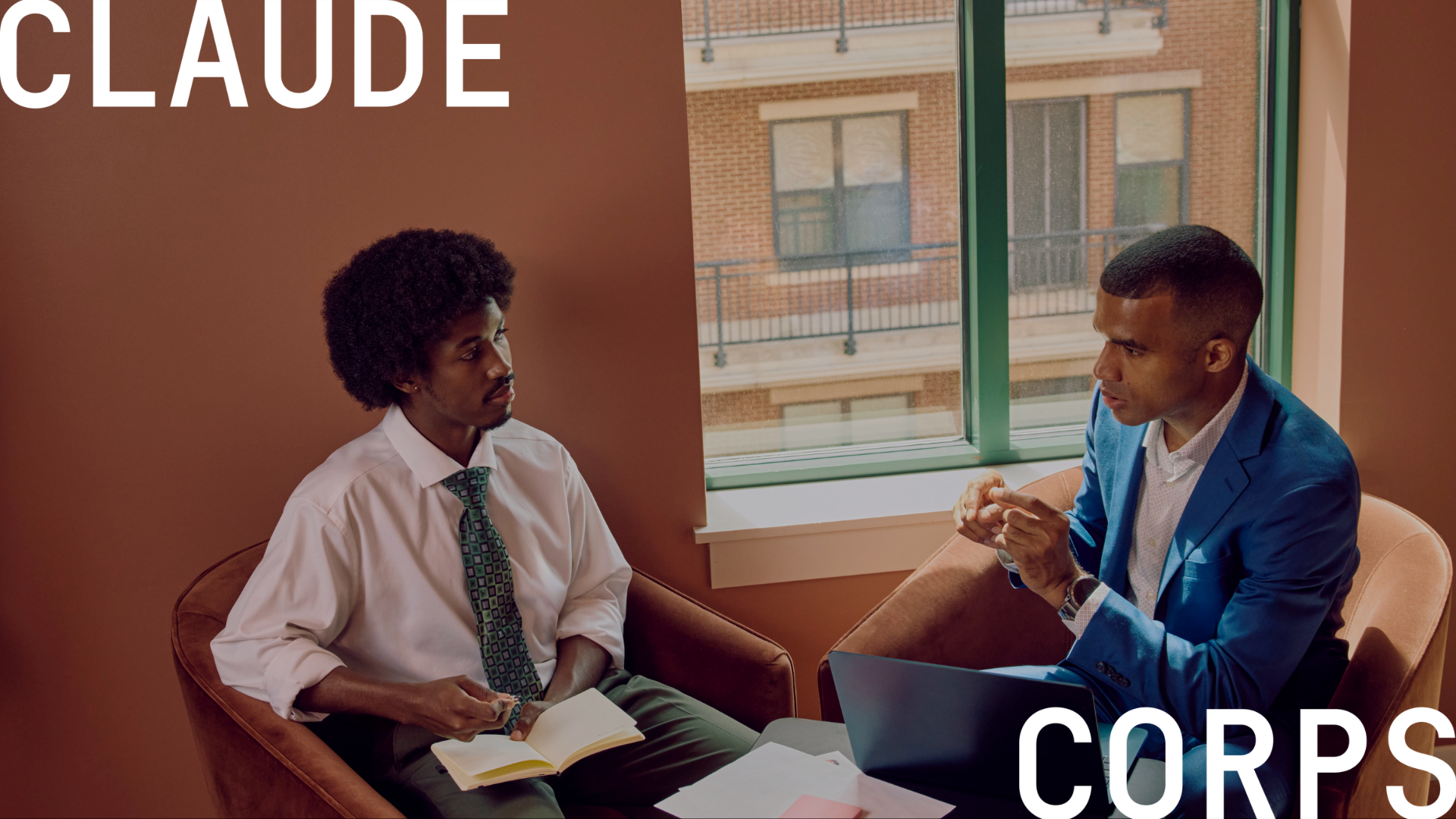
Today, with Anthropic, we are announcing the next frontier of our work at CodePath: Claude Corps
Claude Corps is a $150M, fully funded national fellowship that places 1,000 paid, AI-skilled fellows across 400 host organizations for 12-month placements. CodePath co-designed the program, leads the fellow experience, and serves as the employer of record. Anthropic funds and manages the broader program. Social Finance leads measurement and evaluation.
Here's why we’ve been quietly building toward this moment for the past nine years.
We started CodePath in 2017 because we believed two things at once: that millions of young people from backgrounds like ours had the potential to do the most consequential technical work in the country and that the institutions training them, mostly colleges and universities, were not set up to get them there.
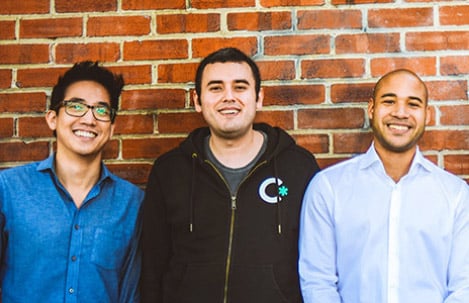 CodePath Co-Founders Tim Lee, Nathan Esquenazi, and Michael Ellison (left to right)
We chose to teach software development because computers are the most powerful tool ever invented, and software development is what unlocks them. Students who master programming develop a strong relationship to learning and the capability to master whatever tools come next. Software development is also the gateway to entrepreneurship.
We chose colleges because they remain this country's gateway to employment. If the model worked there, the same engine could scale to tens of millions.
It worked.
Over 40,000 alumni later, we are now America's largest provider of collegiate computer science education, serving students from over 1,000 colleges and universities.
We started with 15 students in a classroom and no technology. We grew about 50% a year, largely by word-of-mouth. Before long, faculty started asking us to embed our courses for credit.
As we’ve scaled, we have continued to stay true to our mission and keep our promises to students. Forty percent of our students come from households earning under $50,000, but they are 8x more likely to work at the most competitive engineering organizations in the country. Upon graduation, they earn 20% more than the typical computer science graduate.
Those outcomes are not luck. They are the product of nine years of building a flywheel. Strong student outcomes earn student word of mouth. That word of mouth builds grassroots trust with faculty, students, and communities. The technology underneath is what turns the flywheel into a scalable engine, closing the gap between what is taught in schools and what industry actually demands.
Claude Corps is where that engine goes next.
Though we are expanding beyond college, the vision, mission, and methodology remain the same.
We believe that human potential is infinite, and that with enough innovation and creativity, we can design systems that change society. Our number one value since founding has been keeping our promises to our students. We will not compromise it as we scale. And as we expand to new audiences, that promise still holds.
Let me be clear about what is not changing. CodePath's center of gravity remains where it has always been: inside the colleges and universities that train the largest population of low-income, first-generation, and disadvantaged Americans pursuing technical careers. We are deepening that work, not stepping away from it. Claude Corps is built on top of that foundation, not in place of it.
Here is what is new.
CodePath is expanding the population we serve. This has always been part of the plan. Over nine years we have steadily widened the population of students we reach and the levels of disadvantage we serve, from CS majors to first-year persistence to broader pathways into technical careers. Claude Corps is the next step in that arc. Eligibility opens to early-career people regardless of educational background. No degree required. The bar is technical aptitude, communication, self-direction, and the drive to do consequential work.
AI is the most powerful tool for economic mobility we have seen in our lifetimes. With AI, the leverage of one motivated early-career person with strong AI fluency and proficiency has expanded dramatically. What used to require a senior engineering team can now be shipped by an early-career builder with the right training. AI does not just raise the ceiling for people who already have access. It collapses the floor.
We move deeper into systems change. Claude Corps extends our impact into the nonprofits and institutions millions of Americans rely on every day. Schools. Food banks. Veterans' organizations. Refugee resettlement. Faith-based and secular missions. Hyperlocal services and global humanitarian work. The infrastructure we are building is for the field. The playbook is built to be borrowed.
We are also building this in public. Earlier this year, we launched the CodePath-Anthropic Knowledge Network. It is the research arm that will publish what we learn from this work. What skills hold durable value in the AI era. How AI fluency and proficiency are best measured. What it actually takes to embed AI capability inside an institution that has never had it. We will share what we find, cohort by cohort, so other operators and funders can build on it.
If you are early-career and want to build with AI in a place that matters, learn more at anthropic.com/claude-corps.
The first cohort of 100 Claude Corps fellows begins October 19. Applications are now open and close July 17. There is no degree requirement. The only requirements are that you have under two years of work experience, are comfortable working with AI, and are willing to relocate if necessary.
My ask to you: let's make sure the people who can most benefit from this fellowship are the ones who hear about it. Please share widely with your networks.
— Michael